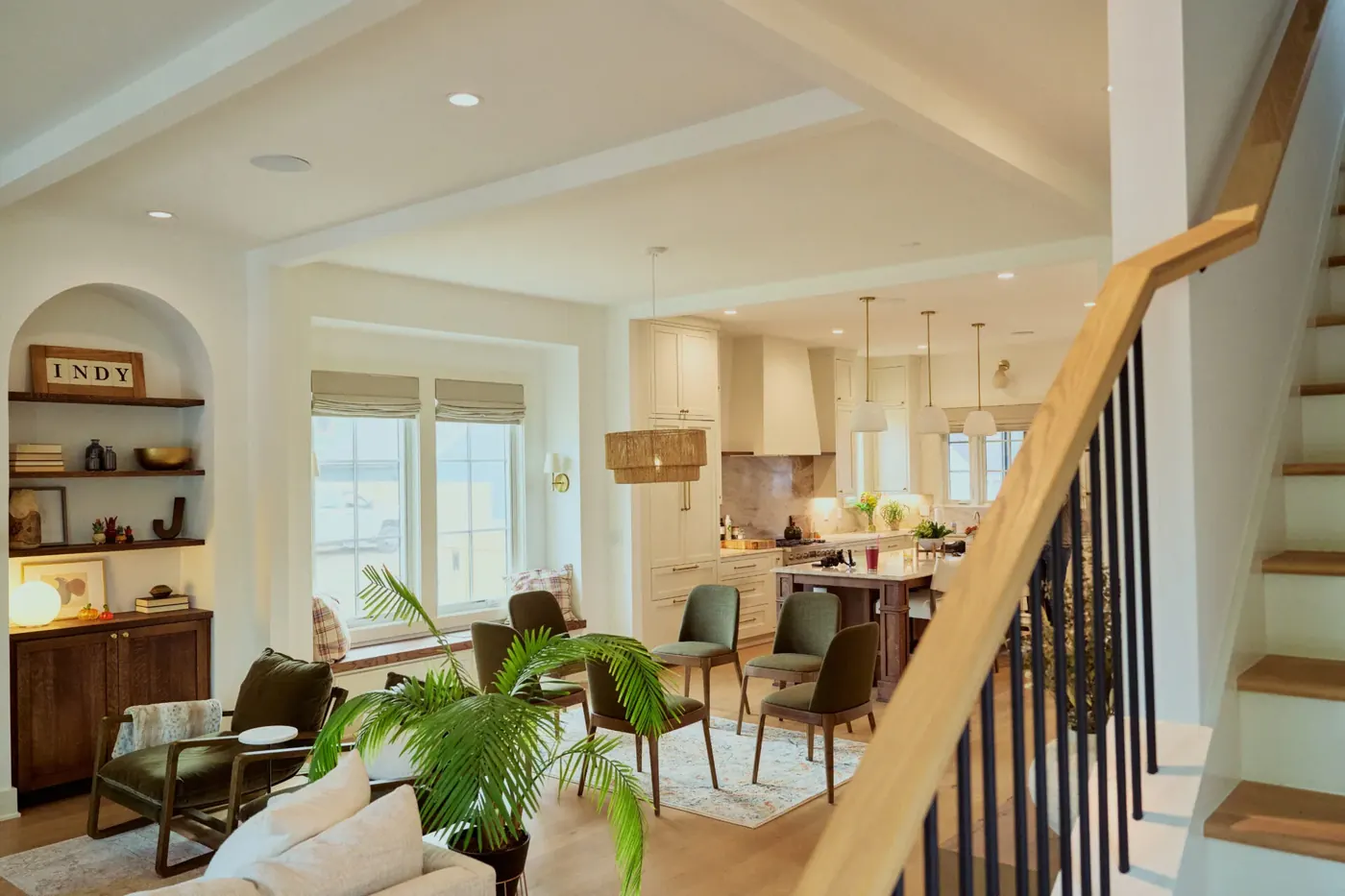
Blind Repair & Restring in and Around Greenwood, IN
Restringing and repair where the part is still made
A short orientation before the detail: this product gets measured in your home, built to those sizes, and installed once it arrives. The answers here cover selection, operation, care and what the warranty does and doesn't include.
- Service: Blind Repair & Restring for Greenwood homeowners
- Service area: Greenwood, IN and surrounding areas For anything already installed, service visits are quick because we're working with parts. For new custom orders, expect a measure, then a few weeks of fabrication, then an install appointment we book once the product has been inspected.
- Insured and bonded
- Serving Greenwood, IN since 2008
Expert Blind Repair & Restring for Greenwood Homes
Most blinds that get thrown out didn't fail, they lost a cord lock or a ladder string. Greenwood has a large stock of blinds worth saving: 8,695 units went up between 1980 and 1999, including 3,235 in the 1980s alone, and much of what's hanging in them is original or close to it. Woodland Streams shows how varied that can be inside one name, at 98 parcels platted across six numbered sections plus a replat in Section 5. Sheffield Park is the opposite, about 130 lots in one recorded section, where a whole street tends to carry the same product from the same period.
There's a point where repair stops being the right advice, and we'd rather reach it with you on the phone than after a visit. Cords, ladder strings, tilt mechanisms and cord locks are generic enough that most blinds from the last 30 years can be rebuilt. Headrail specific parts are not. When a manufacturer discontinues a line, the wand tilt gear or the particular bracket for that headrail stops being made, and no amount of willingness fixes it. Valance clips are the usual casualty. If the part is gone, we'll say the blind is finished rather than charge you to find that out slowly.
Signs You Need Blind Repair & Restring
If you notice any of these in your Greenwood home, it is worth booking a measure. None of it is urgent, and none of it fixes itself either.
Slats near the top have gone yellow against the rest
A knot somebody tied years ago runs through the mechanism
The wand snapped off at its hook this winter
Half the valance clips have gone brittle
The tilt wand spins and nothing turns
A cordless shade has gotten hard to raise
A headrail has dropped at one end
A repair quote arrived and you want a second opinion
The bead chain has come off its wheel again
Cords were cut off for safety and now nothing lifts
How Greenwood Window Treatments Handles Blind Repair & Restring
Every job follows the same five-step process. Transparent, thorough, and done right the first time.
Part availability checked first
Bench work taken away and tagged
Full lift and tilt travel tested
Awkward openings priced before the visit
Chain tensioner refastened to the wall
Blind Repair & Restring in Greenwood
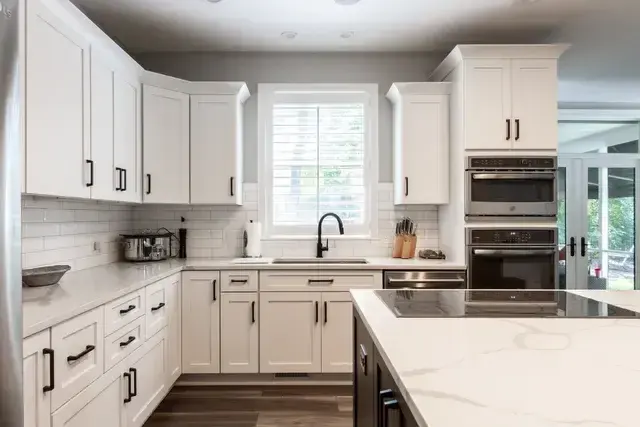
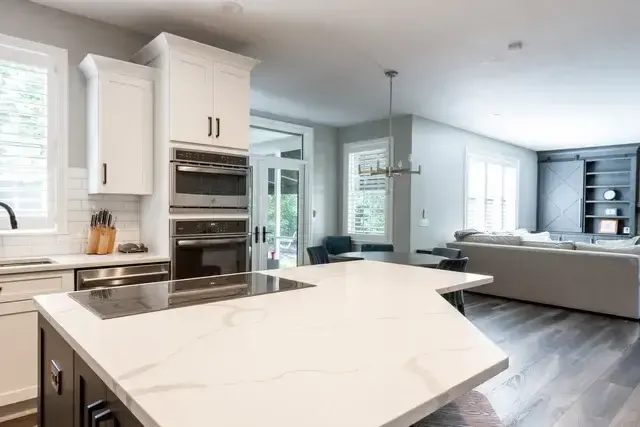
Photographs from real blind repair & restring jobs completed by our crew in Greenwood and surrounding areas.
What Blind Repair & Restring Includes
Every Greenwood job is documented item by item. Here is what the crew covers.
The blind looked at in place first, since half of what gets called a broken blind is a bracket that has worked loose
Manufacturer and product line identified from the headrail label or the hardware before any part is chased
Part availability checked against current production before a repair is scheduled, not after the visit
The honest call made out loud when a part is out of production and no equivalent exists
Repair cost weighed against the national custom range so you can see when a new unit is the better spend
Lift cord replacement done with the correct diameter and lay, because a substitute cord binds in the lock
Cord lock inspected for a worn cam, which is the actual reason most blinds stop holding position
Ladder strings checked end to end, since a broken ladder is what leaves one slat hanging low
Tilt mechanism, wand tilter and gear diagnosed separately rather than replaced as a set out of habit
Bottom rail plugs, end caps and valance clips replaced where age has made them brittle
Vertical vane carriers, stems and the traverse cord checked as a unit on a track that has gone stiff
Roller clutch and idler pin examined on a shade that slips or drifts down under its own weight
Chain tensioner refastened to the wall per the manufacturer instruction wherever a continuous loop is in use
Cord access checked against ANSI/WCMA A100.1-2022 rather than left the way it was found
Slat and vane replacements matched to the existing run where the color is still made, with dye lot variation disclosed first
Fabric and slat condition assessed honestly, because restringing a sun-damaged blind buys you very little
Work quoted per unit after inspection rather than off a phone description, and never against a made-up range
Every repaired unit raised, lowered and tilted through its full travel before we leave the room
What Blind Repair and Restring Costs in Greenwood
There's no published national range for blind repair, and inventing one would be dishonest, so we don't. Repair prices per unit, after somebody has looked at the actual blind and identified the actual failure. What we can give you is the comparison that decides it. National figures put stock blinds and shades near $60 to $600 a window and custom-fabricated units at roughly $250 to $2,600. When a repair on a mid-range blind approaches the cost of replacing it, replacing it is the better call and we'll say so rather than take the work. A run of similar units in one Greenwood house prices better together than one at a time, and Greenwood Window Treatments will tell you which of your Johnson County blinds are worth the parts.
How Blind Repair & Restring Differs by Product
Every product in this trade behaves differently in a room. Here is what that means for this work.
Lift cord replacement: New cord run through the headrail, the lock, the slats and the bottom rail, tied and finished the way the factory did it. The right diameter matters. A cord even slightly off spec drags in the lock and creates the exact problem you called about.
Cord lock rebuild or swap: The lock is the small toothed mechanism that grips the cord when you pull sideways. Its cam wears, and a worn cam is why a blind creeps down after you set it. Swapping the lock is often the whole repair, and it doesn't need a restring to go with it.
Ladder string replacement: The ladder is the pair of strings holding each slat and doing the tilting. When one side breaks a slat hangs, and no amount of lift cord work fixes it. Replacing a ladder means threading the whole stack, which is why it costs more than it sounds like it should.
Tilt mechanism and wand tilter: The gear that turns the ladders, plus the tilter the wand plugs into. These fail separately from the lift, and diagnosing which one is actually stripped saves replacing a part that was fine. A wand that spins freely is usually the tilter, not the gear.
Cordless spring service: The constant-force spring in a cordless headrail loses tension across years of use, which shows up as a blind that won't stay up or that creeps. Some systems accept a new spring assembly and some don't, and which one you own decides whether this is a repair at all.
Roller clutch and idler: On a roller shade the clutch holds position and the idler pin carries the other end. A shade that slips under its own weight usually wants a clutch. A shade that has started to telescope across the tube usually wants the brackets checked for level first.
Vertical carrier and stem repair: Verticals fail at the carrier, at the stem that holds the vane and at the traverse cord that drags the stack. Individual carriers replace on most tracks, which is what makes verticals worth repairing on a wide patio opening rather than replacing whole.
Slat and vane replacement: Individual damaged slats or vanes swapped from current stock where the line and the color are still made. Two cautions: production colors drift between runs, and a new slat in the middle of a ten year old blind can read slightly different in daylight.
Bracket and hardware refit: Loose brackets, stripped fixings and a headrail that has dropped at one end. This is the least glamorous category and one of the most common, and it's frequently the entire fault behind a blind somebody has written off as broken.
Valance, end cap and small parts: Clips, plugs, end caps, hold-down brackets and wands. Plastic gets brittle with age and sun, and a missing clip is why a valance sits crooked. These are cheap parts and the availability question is the same one as everywhere else in this category.
Blind Repair & Restring FAQ
Questions we hear most often from Greenwood homeowners considering blind repair & restring.
Blind Repair & Restring Across Greenwood
We measure and install in every one of these Greenwood neighborhoods. Each has its own page with the build eras, window conditions and mounting notes for that section.
- Blind Repair & Restring in Greenwood Residential Historic District
- Blind Repair & Restring in Carefree
- Blind Repair & Restring in Eagle Trace
- Blind Repair & Restring in Willow Lakes
- Blind Repair & Restring in Sheffield Park
- Blind Repair & Restring in Foxberry Trace
- Blind Repair & Restring in Innisbrooke
- Blind Repair & Restring in Brentwood
- Blind Repair & Restring in Fairview Heights
- Blind Repair & Restring in Woodland Streams
- Blind Repair & Restring in Hickory Stick
Other Window Treatment Services in Greenwood
Greenwood Window Treatments handles the full scope of window treatment work. Explore our other services below.
Faux Wood Blinds in Greenwood
Moisture proof slats where Greenwood kitchens and baths punish real wood
Learn more →Wood Blinds in Greenwood
Stained basswood for Greenwood's stain grade trim, honestly specified
Learn more →Vertical Blinds in Greenwood
Vane systems for the sliders on nearly every Greenwood rear elevation
Learn more →Schedule Your Free In-Home Measure in Greenwood
Reach Us Directly
Our team prioritizes scheduled measures and service calls, and books in-home measures during business hours.
Ready to Book Your Measure?
Call us to set up an in-home measure, or to ask about a treatment that has stopped working. We will talk it through on the phone first.