Fabric and Color Mistakes We See in Greenwood Homes
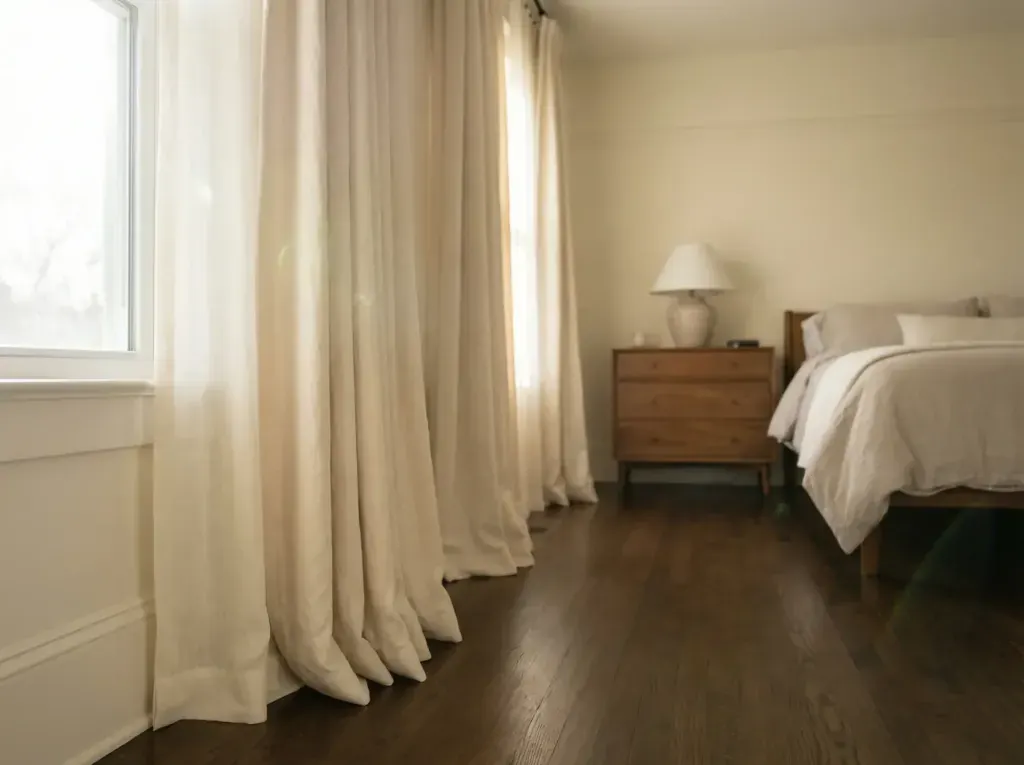
We measure and hang a lot of drapery, and the same handful of fabric and color problems come up again and again, usually because nobody flagged them before the order got placed. Most are easy to avoid once you know what to look for.
Fabric Weight and How Drapery Falls
Pick up two fabric swatches and you can usually tell which one is going to hang well before it's ever sewn into a panel. A heavier fabric, something like a cotton velvet or a tight jacquard, has enough weight to pull itself straight and fall into deep, even folds. A lightweight linen or a sheer voile moves with the air in the room instead, and it shows every crease from being folded flat on a bolt for weeks before it reaches your window.
Weight also decides what the fabric needs behind it. A heavy panel wants a traverse rod rated for real weight, not a thin spring-tension rod that will bow in the middle within a season. In Greenwood homes with tall windows, that sag shows up fast, since the span is longer and more fabric is pulling down on the rod at once.
If a fabric feels thin in your hand but you love the color, interlining is the fix, a layer of flannel-like material sewn between the face fabric and the lining that adds body without changing how the color looks.
Fullness and the Hardware Behind It
Ask what fullness ratio the estimate is actually built on, since "full" gets used loosely and can mean anywhere from one and a half to three times the rod width depending on who's talking. Get the actual number, and compare it against the fabric weight. Heavier fabric generally looks right at a slightly lower fullness than a sheer or lightweight fabric needs.
Ask about the rod's weight rating in pounds, not just its finish or diameter. A rod that looks substantial can still be rated for a fairly light load if it's mostly decorative, and that number matters more than how it looks in a showroom display.
And ask whether center support is included on wide spans, and at what width it kicks in. For a Greenwood window running much past six or seven feet, that's not an optional upgrade, it's what keeps the rod straight and the panels gliding evenly for as long as you own the drapery, so it should be part of the base quote rather than something added after the fact.
The best way to settle a fabric or color decision is to see real samples against your actual window, not a swatch card under artificial light. A free in-home measure gives you that chance, along with a second set of eyes on what the room and the sun exposure actually call for.
Pattern and Texture
Patterned fabric costs more to install than the yardage price alone suggests, and that surprises people who are budgeting by the yard. Every seam between fabric widths in a patterned panel has to match the repeat, which means buying extra length to align the pattern rather than using every inch efficiently. A solid or a small tonal texture wastes almost nothing.
If the budget is tight, one option is using pattern on a single feature window, say a bay window in the main living space, and keeping the rest of the house in a coordinating solid or texture. That gives you the visual interest without paying the pattern-matching upcharge on every window in the house.
Another value move for Greenwood homes: choose a texture instead of a printed pattern. A woven-in texture, like a dobby weave or a subtle jacquard, reads as visually rich without the extra yardage and labor that come with matching a large printed repeat across multiple panel widths.
Light Control and Lining Options
Think about lining room by room instead of house-wide. A media room or bedroom usually wants blackout, full stop, because ambient light from a streetlight or a neighbor's porch light becomes obvious the moment the tv is off or you're trying to sleep past sunrise. A home office wants something in between, enough control to kill glare on a monitor without making the room feel dim all day.
A formal living room, especially one that's mostly for entertaining rather than daily use, can often skip heavy lining altogether and use a light interlining instead, just enough to add body to the fabric without changing how much light comes through. That keeps the room bright and layered rather than closed off.
In Greenwood homes with big west-facing windows, we'll sometimes recommend a sheer as the inner layer and a lined drapery as the outer layer on the same rod. That combination lets you dial in privacy and glare during the day with the sheer, and light control at night with the heavier panel.
Color and Sun Exposure
People assume a UV-resistant fiber or coating means the fabric won't fade, and that's not quite right. What it actually does is slow the rate of change, so a fabric that might show visible fading in a couple of years in a hot, sun-heavy window might take five or six years to show the same change with the right fiber and lining. It's a real difference, but it's a delay, not a stop.
Silk is the fastest fading natural fiber by a wide margin, and we're cautious about recommending it for any window with direct afternoon sun regardless of lining. Solution-dyed acrylics and many polyester blends hold color much longer because the color is built into the fiber itself rather than sitting on the surface, but they don't have the same hand feel as natural fiber, which is a real tradeoff some people don't love.
If a Greenwood homeowner is set on a natural fiber for a sun-heavy window, heavy lining and occasionally closing the panels during peak sun hours are the two things that actually help slow the damage.
Frequently Asked Questions
Will lined drapery really stop my curtains from fading?
No, and be skeptical of anyone who tells you otherwise. A good blackout lining or a UV-resistant fiber slows how fast color changes in direct sun, sometimes by years, but nothing on the market keeps fading from happening altogether. A west-facing window is going to show some change over time no matter what lining or fabric you choose, so plan on that rather than expecting a permanent fix.
How much fabric do I actually need for one window?
It depends on fullness ratio and heading style, not just the glass measurement. A pleated panel at standard fullness typically needs two to two and a half times the rod width in fabric, and patterned fabric needs extra yardage to match repeats across seams. A measure appointment is really the only reliable way to get an exact number for a specific window.
Can I use the same fabric in every room for a consistent look?
You can, but it does not always look as good as people expect. Light exposure and room function vary from room to room, so a fabric that is perfect in a formal living room can feel wrong in a sunny breakfast nook. A lot of homes do better with a coordinated palette, same tone family or texture, rather than one identical fabric everywhere.
 How to Measure Your Own Windows for Blinds or Shades
 Room by Room Comfort Through an Indiana Winter in Greenwood
 Wood vs Faux Wood Blinds for Greenwood Homes: How to Pick