Phasing Window Treatments Room by Room in New Greenwood Homes
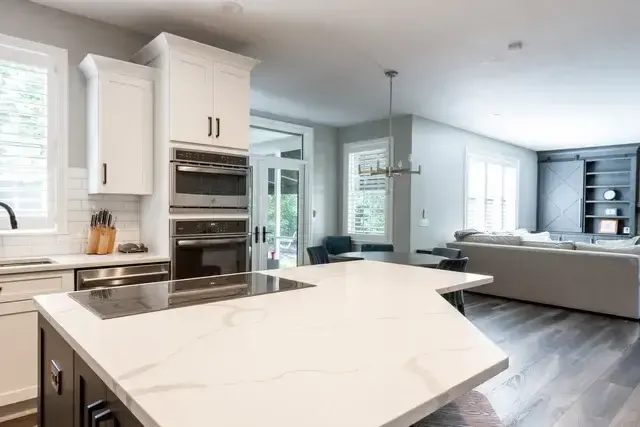
A new house is the easiest job in this trade to get wrong, because everything looks finished before it actually is. Trim gets adjusted after the walkthrough. Drywall builds up in corners in ways no drawing predicts. Order window coverings from the builder plan and you will be living with the difference for years. Here's when to measure a new Greenwood build, what the builder package really is, how to sequence the work, and where the great room wall fits in.
Don't cover everything at once
The instinct in a new house is to finish it. Resist that on window coverings, because half of these decisions get better after you've lived in the rooms. Which window puts sun on the television at six. Which bedroom the streetlight reaches. Which door you use so often that a blind on it needs hold down brackets. Which room you never actually sit in. None of that is knowable from a plan or a showroom, and all of it changes what you would buy.
What follows is the order that works in a large house, and it holds whether the house sits in Greenwood Residential Historic District, Carefree, Eagle Trace, elsewhere in Greenwood, or out in IN communities.
The two story great room window wall
This is the wall that stalls the whole project, so take it apart into separate questions.
Do the upper windows need covering at all
Start here, because sometimes the answer is no. If the upper glass faces north and the room is comfortable, leaving it bare keeps the architecture and saves a large sum. If it faces west and the room is unusable in the afternoon, the upper band is the entire problem and covering the lower half accomplishes very little.
Operation
Nothing at that height gets operated by hand. Motorization is the practical answer rather than a luxury. Battery motors run roughly $100 to $300 a window less than hardwired, and on a wall that needs a lift to reach, that saving is spent again every time a battery wand needs service. Manufacturers commonly publish about a year of runtime. If there's any chance of running power, run it.
How to split the wall
One enormous shade is usually worse than two sensible ones. A very tall shade is heavy and rolls to a large diameter at the top, and it is more likely to track poorly over time. Larger shades also give up more at the edges: one major manufacturer notes bigger light gaps on shades 120 inches and taller or with a height to width ratio near four to one. An upper band and a lower band, operated separately, behaves better and lets you treat the sun problem and the privacy problem as the different problems they're.
Fabric on a view wall
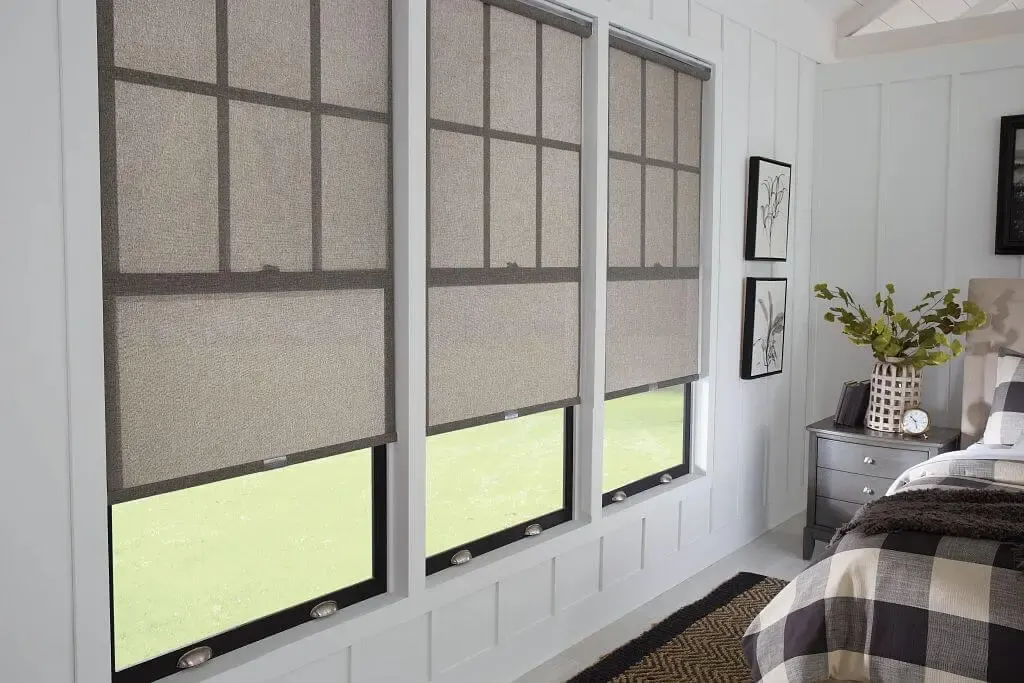
Solar shades are the usual choice here because they cut glare while keeping the view. Openness factor is the spec that matters, running from about one percent up to ten percent. Lower openness means more glare control and less view. Higher openness means more view and more glare. Sitting in the room at the worst hour with samples in your hand beats any chart.
Phase two: the rooms you live in
Kitchen, family room, home office, and wherever the kids do homework. These are the rooms where the covering has a job beyond privacy, and the job differs. A kitchen wants daylight and easy cleaning. An office wants glare control on a screen without the lights on all day. A family room facing west wants something that actually slows the afternoon heat, which is where a double cell honeycomb or a lower openness solar shade earns its money.
Do these in whole rooms rather than one window at a time. Matching within a room matters much more than matching between rooms, and ordering a room together means one dye lot.
Phase three: the layer that makes it look finished
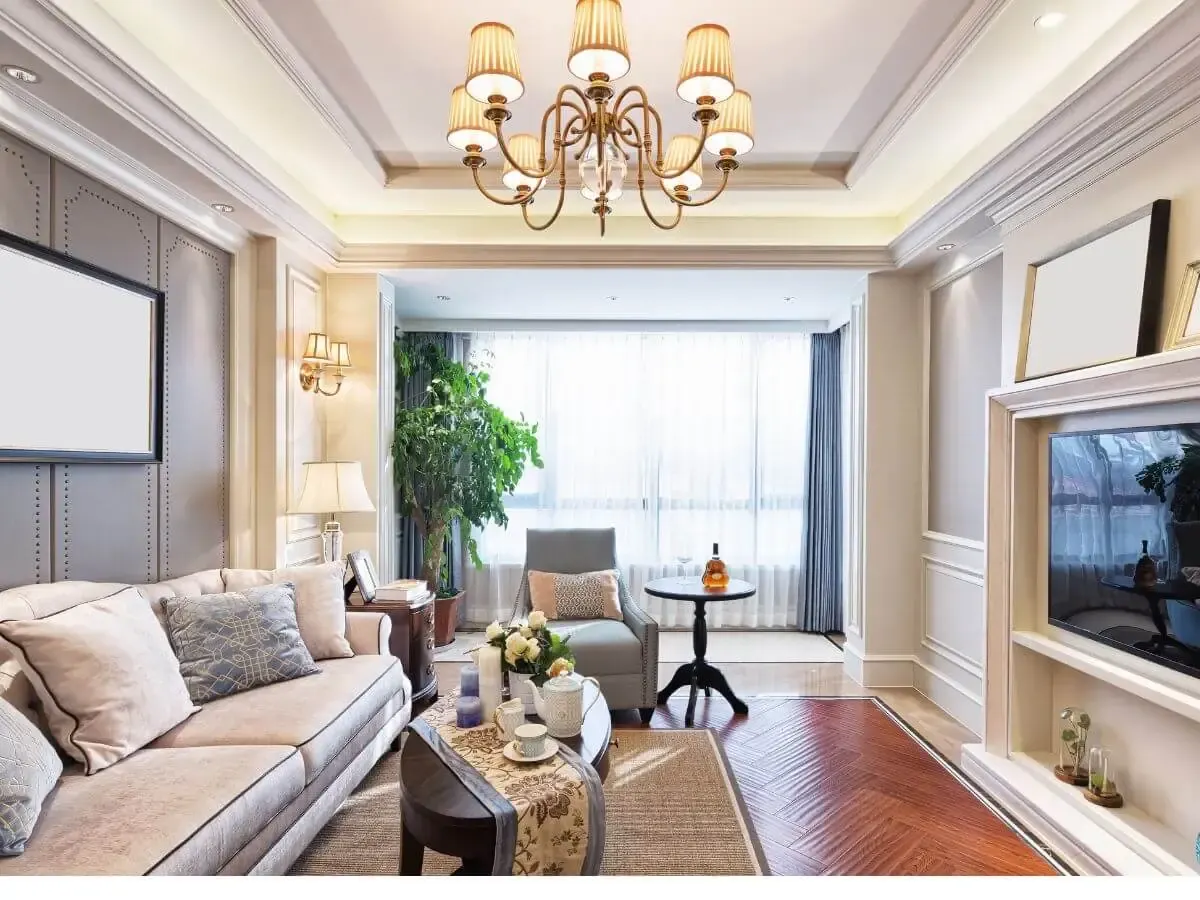
Drapery, top treatments, valances, and anything else decorative come last. There are two reasons. The first is that soft treatments look best chosen against furniture and rugs that already exist. The second is practical: drapery has to be measured after the finished flooring is in, because the floor sets the hem.
If drapery is anywhere in your plan, say so early even if you aren't buying it yet. Blocking behind the drywall for rod brackets is nearly free during construction and awkward afterward.
What the phases cost
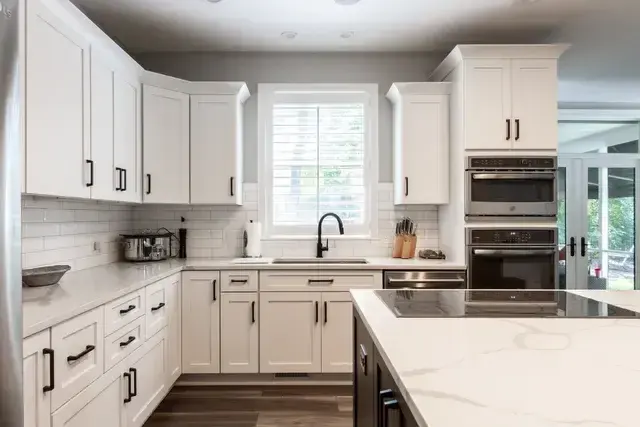
Stock coverings run roughly $60 to $600 a window nationally and custom coverings measured and installed run roughly $250 to $2,600. Phase one is usually the cheapest and the one you notice first. The great room wall is usually the most expensive single decision in the house. Spreading those apart over a couple of seasons is how most Greenwood families get a large house finished without one enormous order.
Window coverings are the last line item in a new house and the first one people underestimate. Spend where it matters and phase the rest. Get the finish codes recorded so later rooms still match. Greenwood Window Treatments will price a new Greenwood home room by room so you can choose the order. We are insured and insured and the quote is written. Reach us at (317) 854-7158 when you're ready to plan it.
Keeping a big house consistent
A large house done in stages can end up looking like it was done in stages, and a few habits prevent it. Pick one product family for the public rooms so the hardware and the stack look related from window to window. Pick one exterior facing color so the front of the house reads as one house from the street, which matters on a Greenwood elevation with six windows showing at once. Order any single room complete rather than a window at a time. And record every product line, fabric name, color code, and mount type on the order, because a white bought in 2008 won't necessarily match a white bought later.
Inside mount or outside mount is worth deciding at the house level too. Mixed mounting across one elevation is the detail that makes a home look assembled rather than designed.
Phase one: privacy, on day one
Bedrooms come first. Bathrooms next. After that comes any room at eye level from the street, along with anything a neighbor's window looks straight back into. These need real coverage before you sleep in the house, not after.
For bedrooms, decide the darkness question now rather than later. Room darkening fabric stops light coming through the shade, but light comes around the shade, so a truly dark room needs side channels or an outside mount with two to three inches of overlap per side. It costs more. It's also the single upgrade people are gladdest they made.
Everywhere else, temporary paper shades are cheap, they go up in minutes, and they come down without damaging fresh paint. They are the right answer for a dining room you haven't decided about yet.
Frequently Asked Questions
When should window coverings be measured in a new build?
After the drywall is up and the trim and paint are finished, and ideally after the punch list is closed. Plan dimensions describe framing intent rather than the finished opening you will actually cover. Drywall thickness, corner bead, trim reveal, and paint all stack up, and an opening the plan calls thirty six inches can finish anywhere across a range. Builders also adjust trim after the walkthrough, so a measure taken earlier can go stale. Drapery is the exception and gets measured after the finished flooring is in.
Are builder blinds bad?
No, they're a stock product cut down on site, and they work. What they aren't is tailored. A machine on site shortens the headrail and trims the slats and bottom rail, which leaves a cut edge rather than a factory one, and the hardware inside the headrail doesn't move when the rail gets shorter. You usually get one white and one light filtering fabric for the whole house. That is fine in secondary rooms and thin in a bedroom you want dark.
Do I have to do the whole house at once?
Not at all, and most people shouldn't. Cover the rooms that need privacy before you move in, which means bedrooms, bathrooms, the front rooms, and anything at eye level from the street. Use inexpensive temporary paper shades everywhere else. Then do the rooms you actually live in, and leave drapery and decorative treatments for last. Living through one summer tells you which windows are punishing, and that's information no showroom appointment can give you.
What do we do about the two story great room windows?
Break it into separate questions. Do the upper units need covering at all? If they face north and the room is comfortable, leaving them bare is a legitimate answer. If they face west, they are the whole problem. Operation is the next question. Nothing at that height is hand operable, so motorization is practical rather than fancy, and hardwiring while the walls are open beats an annual battery service on a wall that needs a lift. Then split the wall into two bands instead of hanging one giant shade.
 How Roller Shades Work and How to Spec Them in Greenwood
 Honeycomb Shade Choices Room by Room in Greenwood Homes
 What Window Treatments Cost in Greenwood Homes, Start to End