Vertical Blinds, Panel Track, or Shades for Your Greenwood Slider
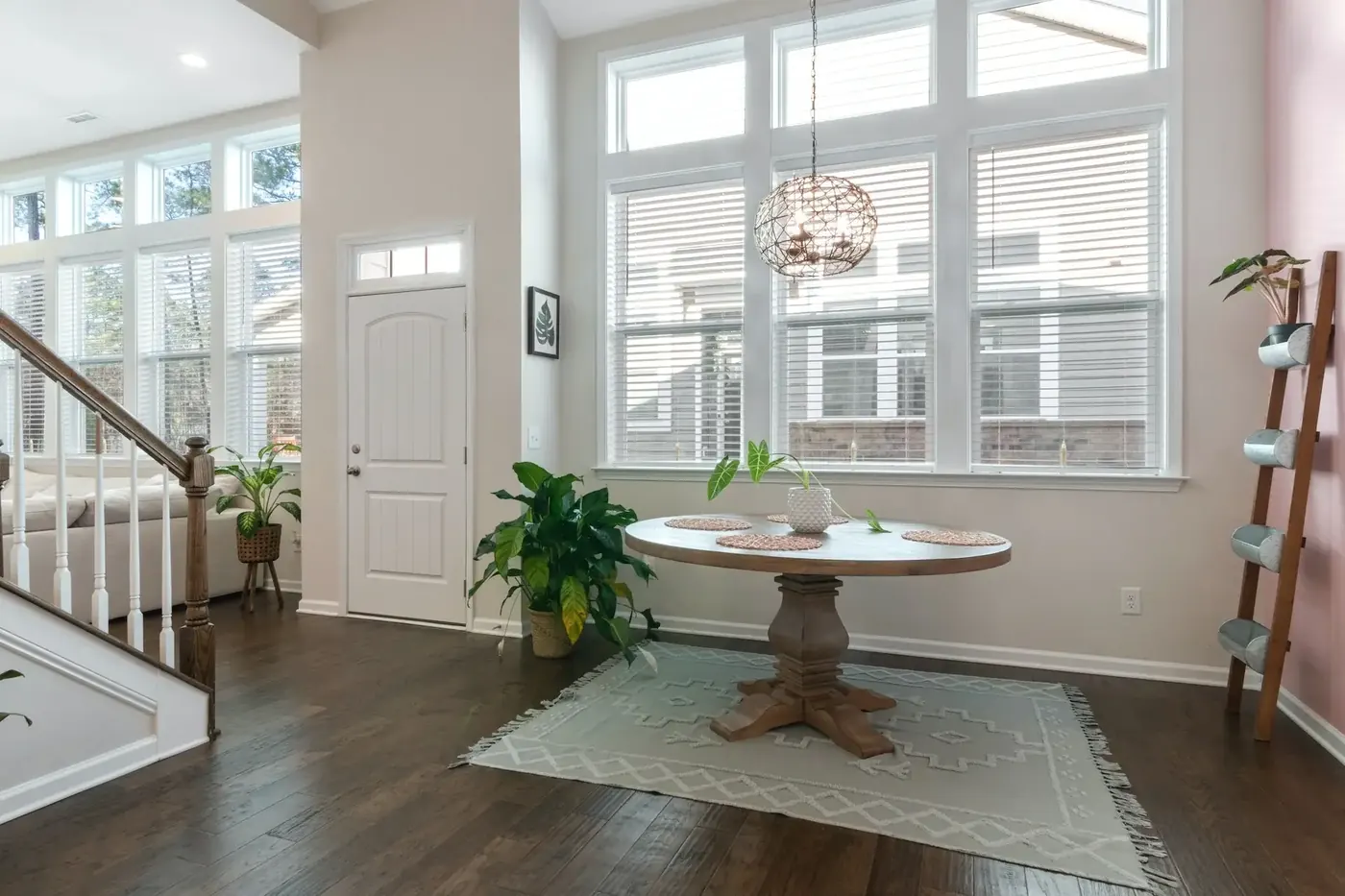
Covering a sliding glass door is a different project than covering a window, even though it's tempting to shop for both the same way. The width and the fact that it has to keep opening change the list of products that actually work.
Why a Standard Window Treatment Doesn't Work on a Slider
The most common mistake we see on a sliding glass door is ordering a treatment sized for the window it resembles instead of the door it actually is. A slider is a window in the sense that light comes through it, but it's a door in every other sense that matters for a window treatment: it has a handle and a lock, and it runs on a track that needs to open fully every single day.
That distinction matters because a lot of standard shades and blinds are built with the assumption that the opening doesn't move. A sliding door does move, and the covering has to get completely clear of it, not just lifted partway, every time someone walks through.
Homeowners in Greenwood often start shopping for a slider treatment the same way they'd shop for a picture window, focused on fabric and light control first. Function has to come first here, or the fabric choice ends up not mattering much.
How the Main Slider Options Compare
Vertical blinds are the old standby for a reason in Greenwood. Individual vanes rotate to control light and stack together to one side, clearing the doorway completely when the door needs to open. They handle width well, since adding vanes is cheap compared to building one giant continuous shade, and they hold up fine over years of daily use.
Panel track blinds are the more modern version of the same idea, wide fabric panels instead of narrow vanes, gliding on an overhead track and stacking to one side the same way verticals do. Fewer, wider panels give a cleaner look than a row of narrow vanes, though panel track systems generally cost more than a comparable vertical blind.
Cellular or roller shades work on a slider too, but usually in a different role. On a door with a fixed glass panel next to the operable one, a single shade sized to just the fixed section is common, leaving the moving panel to its own smaller shade or no covering at all. Covering the full width of a slider in one continuous cellular shade is possible but usually means motorizing it, since a manual lift that wide gets heavy and tends to raise unevenly.
What Sliding Door Coverings Cost
As a general national range and not a quote for any specific door, vertical blinds for a typical 6 to 8 foot slider run $150 to $400 depending on material, with vinyl and fabric at the lower end and faux wood at the higher end.
Panel track systems for the same size opening commonly run $300 to $700 nationally, and a motorized shade spanning the full width of a wide slider often lands between $500 and $1,200 depending on fabric grade and the width being covered.
Your specific door's width, whether it's a two-panel or three-panel slider, and the product category you choose all move these numbers more than a general range can capture. A free in-home measure turns this into an actual number for your Greenwood home instead of a range to guess from.
A cleaner, more current look on a sliding door is usually a smaller change than people expect, once the width and the door hardware have been measured correctly. A free in-home measure is the easiest way to see the options laid out for your specific door.
Keeping Foot Traffic and Pets from Wrecking the Hardware
A well-designed treatment on a slider still has to survive daily use, and that's worth planning for up front rather than discovering the hard way. High-traffic doors take more bumps from shoulders and bags passing through than any other opening in the house, plus the occasional kid running full speed on the way outside.
Vertical blind vanes handle bumps reasonably well since each one moves independently, but the bottom chain that keeps them aligned is a common failure point if it gets caught underfoot repeatedly. Panel track's solid bottom rail avoids that particular issue.
Dogs that like to watch the yard are the wildcard in a lot of homes. A shade or a set of vanes left down at nose height for months on end will eventually show it, so the design plan is worth revisiting once the household's actual habits become clear, not just the measurements.
Mounting and Sizing Around a Door That Still Has to Open
Mounting height and clearance matter more in a busy Greenwood household than the brochure measurements suggest. The stack, whether vanes or panels, needs to clear the doorway fully when the door is open, and it needs to sit high enough and far enough to one side that a kid running through at full speed doesn't clip it.
Outside mount is standard on sliders since the door frame rarely has the depth for an inside mount, which works in your favor here too, since outside-mounted hardware sits further from the glass and slightly out of the path of daily bumps.
Door hardware needs clearance from the mounting brackets so the treatment doesn't become one more thing that has to be worked around every time someone actually uses the door. That includes any screen door track sitting outside the glass.
Frequently Asked Questions
Will vertical blinds fit a really wide sliding door?
Vertical blinds handle width well since adding more vanes is straightforward, unlike a single continuous shade that has to be engineered as one wide piece. They're a common choice for wider sliders and multi-panel doors for exactly that reason.
Can I put regular cellular shades over my sliding door?
You can, though it usually works better sized to just the fixed glass panel rather than the full moving width, unless the shade is motorized. A manual lift across 8 feet or more of fabric gets heavy and tends to raise unevenly over time.
What's the difference between vertical blinds and panel track blinds?
Vertical blinds use narrow rotating vanes, usually 3 to 5 inches wide, that stack to one side. Panel track blinds use fewer, wider fabric panels on a similar stacking track. Panel track generally gives a cleaner, more modern look and typically costs more for the same opening.
 How to Measure Your Own Windows for Blinds or Shades
 Room by Room Comfort Through an Indiana Winter in Greenwood
 Wood vs Faux Wood Blinds for Greenwood Homes: How to Pick