Measuring Tall Windows: What Goes Wrong and How to Avoid It
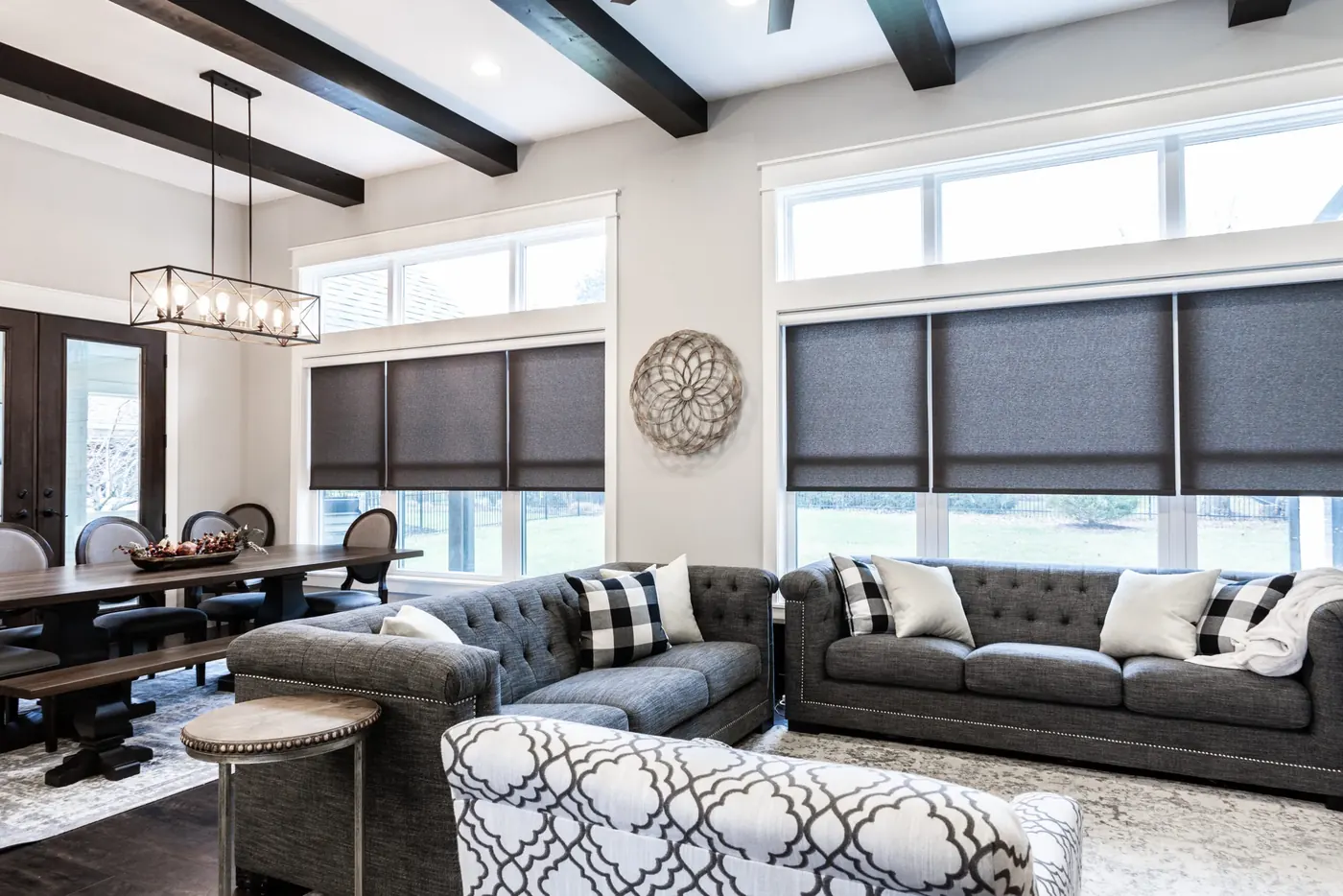
Some windows sit high enough or wide enough that operating them by hand stops being convenient and starts being genuinely impractical, and that's exactly the situation motorization was built to solve.
Why Size Pushes Hardware Past Its Limit
Most of the mistakes on a tall or oversized window trace back to treating it like a bigger version of a standard window instead of a genuinely different installation. Hardware rated for a six-foot drop doesn't automatically scale up safely to ten feet just because it's technically possible to order it in that length.
This shows up months after install more often than on day one. A shade that operates fine when it's new can start sagging or binding at the mechanism a year or two in, once the hardware in a Greenwood home has spent enough cycles carrying weight it wasn't quite built for.
It's worth asking directly what weight and width rating a specific product line carries before ordering, rather than assuming a manufacturer's published specs apply the same way to every finish and fabric option within that line, since a heavier blackout lining can push a shade closer to its hardware's limit than a lighter fabric would.
One Shade or More Than One
Motorized shades handle a multi-shade setup especially well, since a single hub or app can group several shades together and raise or lower them in sync with one command, which matters more on a wide window wall than it does on a single window where manual operation was always going to be a one-at-a-time task anyway.
Grouping shades this way also means a Greenwood household doesn't need a separate remote for every shade on the same wall. One control point operates all of them together while still allowing individual adjustment when only part of the wall needs to change, like closing just the shade nearest the afternoon sun.
The grouping software on most current systems is straightforward enough that a homeowner can set it up after install without help, creating custom groups for different times of day or different rooms without needing an installer to come back and reprogram anything.
Measuring and Installing on a Window That Big
A split configuration changes what the measure needs to capture, since each section needs its own precise width and the gaps between sections need to be planned before ordering, not adjusted after the fact. Getting the spacing between shades even and intentional looking takes more planning upfront than a single shade would.
This is another spot where an in-person measure matters more than it would on a standard window, since a Greenwood installer walking the actual space can plan mullion alignment and section widths in a way that's difficult to get right from measurements alone without seeing the window in person.
This planning conversation is worth having early, ideally before any construction or drywall work near the window wraps up, since running power for a motorized option or confirming mullion spacing is far easier before the finishes go in than after.
Deciding between one shade and several usually comes down to seeing the actual window in person. A free in-home measure from Greenwood Window Treatments can walk through both configurations on your specific window and show what each one would look like raised and lowered.
Where All That Fabric Goes When It Stacks
Fabric choice affects cost here too, since a lower-profile fabric that stacks tighter when raised often costs a bit more per yard than a bulkier, cheaper option. On a standard window that difference barely registers. On a tall window, where the stack height actually shows in the sightline, it's a cost worth paying for the tighter fabric.
Cassette-style headrails, which enclose the stacked fabric in a fabric-wrapped or metal housing instead of leaving it exposed, add cost as well but solve the appearance question directly. For a Greenwood great room where the window itself is the focal point of the room, that's often money well spent.
None of this fabric cost difference is large on a single standard window, which is part of why it's easy to overlook. On a wide window wall with several shades, though, the per-yard difference multiplies across enough fabric that it's worth actually comparing options side by side rather than defaulting to whatever's cheapest.
Reaching the Control on a Window That Tall
A wand or a cord works fine up to a point, but on a window with an eight or ten foot drop, the control ends up dangling well out of comfortable reach, or worse, pooling on the floor where it's a tripping hazard and a magnet for kids or pets. Extending a wand that far also makes it unwieldy to actually use with any precision.
This is one of the clearest cases where motorization stops being a luxury upgrade and starts being the practical answer. Remote or app control doesn't care how tall the window is, since there's no physical reach involved at all. For a Greenwood great room or a stairwell window nobody can reach without a ladder, motorized control is often the only realistic option rather than one of several.
Frequently Asked Questions
How tall does a window need to be before I need special hardware?
There's no single cutoff that applies to every product line, since different manufacturers rate their standard hardware differently, but as a general guideline, drops beyond roughly eight feet or widths beyond ten to twelve feet start pushing past what a lot of standard residential mechanisms are built for. Past that range, expect a conversation about reinforced tubes and heavier-duty clutches rather than a standard order.
Can I just order a wider or taller version of a normal shade?
You can usually order the size, since most manufacturers will make product to a wide range of dimensions, but ordering the size doesn't automatically mean the standard hardware handles it well. This is where a lot of disappointing results come from: a shade that technically fits the opening but sags or wears out faster than expected because the hardware wasn't upgraded to match the size.
Is motorization required for a very tall window, or just recommended?
It's not strictly required, since a long wand can technically operate a tall shade, but past a certain height it stops being practical. A wand extending eight or more feet is awkward to control precisely and often ends up dangling somewhere inconvenient. Most people who try manual control on a genuinely tall window end up motorizing it within a year anyway, so it's worth considering upfront.
 How to Measure Your Own Windows for Blinds or Shades
 Room by Room Comfort Through an Indiana Winter in Greenwood
 Wood vs Faux Wood Blinds for Greenwood Homes: How to Pick